DESIGN PROCESS
Phase 1:
THE FOUNDATION


Every piece begins its life as a meticulously hand-carved wooden core, most often shaped from premium Burmese rosewood or dense red sandalwood. To seal and protect this canvas, artisans manually rub raw, natural lacquer deep into the wood's grain.
For our larger vessels and furniture, this is followed by the ancient Pi Ma Gua Hui technique—a rigorous structural foundation where coarse, medium, and fine linen are layered and seamlessly bound with mineral ash. This painstaking preparation ensures the piece will never warp, granting it a lifelong integrity.

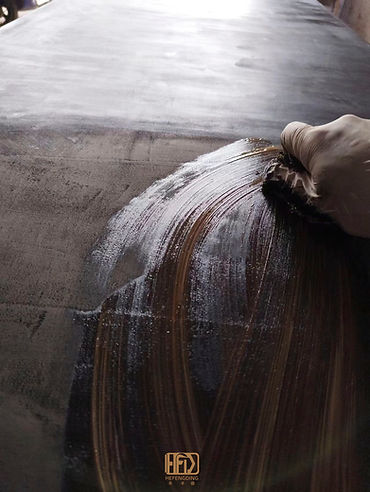
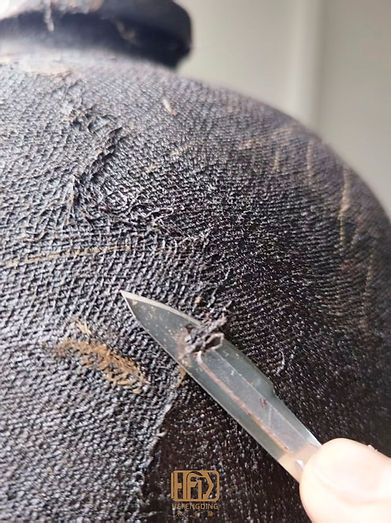
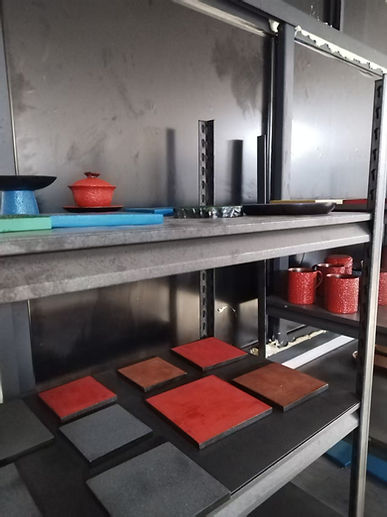
Unlike synthetic coatings that dry in days, raw natural lacquer must be cured in a climate-controlled, lightless room where humidity is strictly maintained between 70% and 80%. The foundational base alone must sit undisturbed in absolute darkness for months before the true artistry can even begin. This agonizingly slow process allows the colors to deepen into a pure, unclouded state, guaranteeing a finish that will endure for generations.
PHASE 2:
THE DIVERGENCE
Once the canvas is cured, the path splits. The artisan applies ink to our 4 lacquerware styles
犀皮漆
Xi Pi Qi (Rhinoceros Skin Lacquer)
The design methodology of Xipiqi draws inspiration directly from the profound order of nature. Chinese history reveres this style as the "gentleman’s vessel" because of its heavy and restrained character. The continuous patterns reflect rivers flowing across the earth or clouds drifting through the sky. Artisans do not paint this aesthetic. They grow it through the deliberate accumulation of history.
The Genesis of Topography
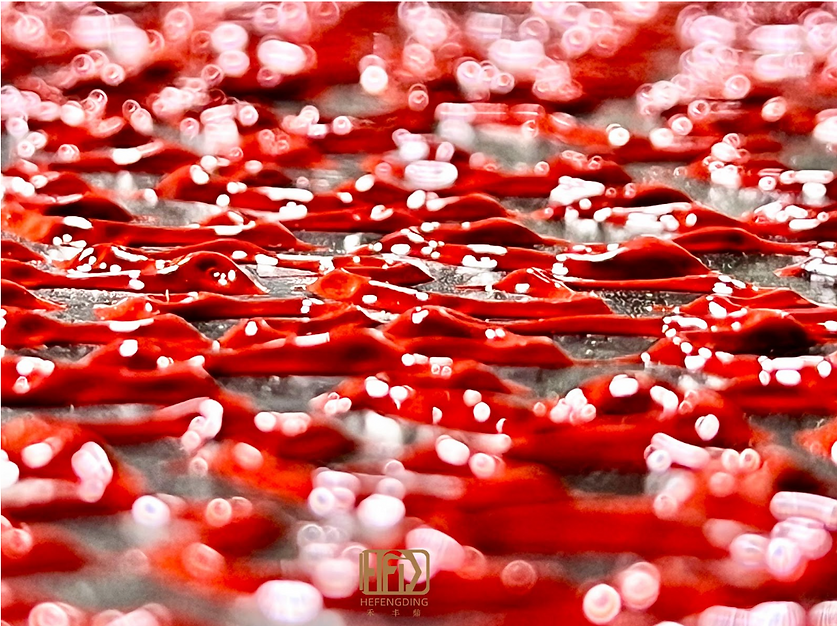
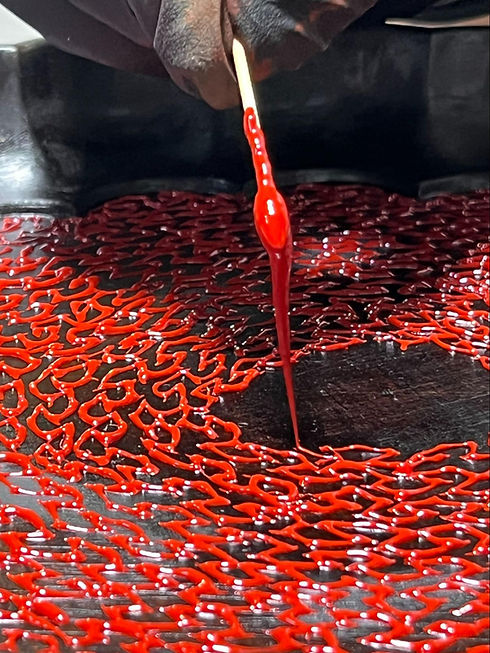
The Xipi process begins with Da Nian—the meticulous creation of a chaotic, raised foundation. Artisans blend rich color lacquer with natural egg white, using a fine bamboo tool to painstakingly build elevated, three-dimensional mounds on the vessel's surface. Because these foundational ridges are applied so thickly, they must cure in absolute darkness in a climate-controlled room for six months to a full year before they harden entirely.
The Stratification
Once the raised topography is set, the artisan begins the grueling process of stratification. Successive layers of contrasting raw lacquer are painted over the mounds—for example, a layer of crimson red followed by a layer of pure gold. Because the humidity chamber requires 10 to 15 days to cure a single coat, this cycle is repeated over a matter of years. A minimum of 25—and often over 40—distinct layers are built up, completely submerging the original mountains in a thick, protective shell.
流金漆
Liu Jin Qi (Flowing Gold Lacquerware)
The Methodology of Fluidity
The design methodology for Liujin takes direct inspiration from the unpredictable beauty of a sudden downpour. It channels the refined Chinese pastime of burning incense to quietly listen to the rain. Artisans capture a fleeting and fluid moment in pure gold. Every golden streak represents an unrepeatable dialogue between human intent and the elegant forces of gravity.

The Flawless Canvas
Liujin fundamentally reverses the standard timeline of lacquer artistry. Xipi and Boluo establish their texture immediately on the bare wood. For Liujin, artisans must first build a perfectly flat foundation of up to 10 distinct layers of pure raw lacquer. They cure each layer for 10 to 15 days and meticulously sand the surface until it becomes completely flawless. The true artistry only occurs at the very end of the coating process.
The Liquid Rhythm
Once the canvas is perfect, artisans blend fine gold powder directly with raw lacquer. Rather than painting a static, controlled pattern, this dense, golden liquid is splashed, dripped, or guided over a fresh, wet layer of transparent lacquer. The artisan relinquishes partial control to gravity, capturing a dynamic, fluid rhythm akin to the unpredictable path of heavy rain. To ensure the gold is never worn away, the flowing pattern is immediately sealed beneath a final, thick layer of transparent lacquer.

The inspiration behind Boluoqi is the art of concealment. This methodology embodies the ancient philosophy of quiet strength. It does not boast or demand immediate attention. Instead, it harbors a deep and subtle power that reveals itself only upon close inspection. Artisans create an organic marbled depth that looks exactly like it grew naturally from the heart of the wood.
菠萝漆
BO LUO QI (PINEAPPLE FINISH Lacquer)
The Organic Matrix
Operating under the philosophy of "Artistry First, Coating Last," Boluoqi relies on capturing raw, unpredictable earthly textures. Instead of painting artificial mounds, artisans take dried sections of natural loofah vine and press them directly into the wet foundational lacquer. This establishes a deeply uneven, deeply organic base layer that mimics rugged rock formations and complex natural
The Submersion
Once the loofah matrix has dried and adhered, it is deliberately buried. Artisans apply between 10 and 20 alternating layers of colored raw lacquer over the vines. Because the foundation is so intensely textured, the lacquer pools in the crevices. Each individual coat requires over a week of curing in the shadow chamber—a months-long process of meticulously erasing the physical texture entirely until the surface of the vessel is built up flush.
冰裂纹
BING LIE QI (ICE-CRACKLE LACQUERWARE)
The Methodology of Imperfection
The Ice-Crackle aesthetic draws its inspiration directly from classical Ming dynasty philosophy. This methodology celebrates the profound beauty found in fracture and vulnerability. It captures the exact moment ice shatters. This chaotic instant actually possesses its own perfect natural rhythm. It stands as a direct testament to the collaboration between human hands and the forces of nature.

The Gilding and Suspension
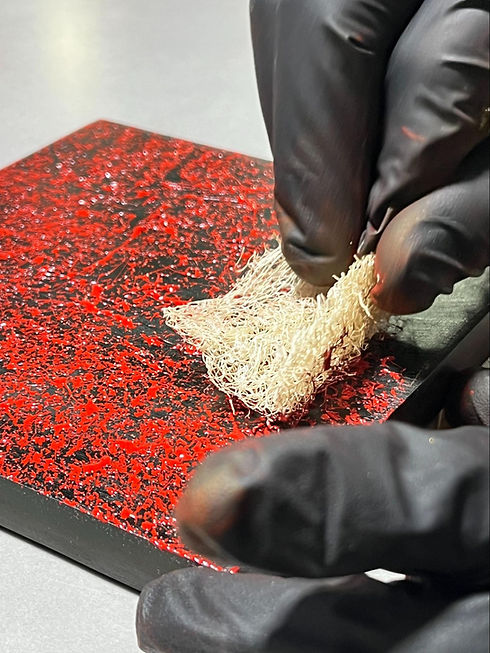
While these deep crevices remain exposed, artisans brush dry brilliant gold powder generously across the surface. The gold naturally settles into the fractured depths. Artisans carefully sweep the excess powder away to leave sharp veins of gold suspended in the dark lacquer. Finally, they seal the fractured surface completely shut with a heavy coat of transparent lacquer to trap the gold safely within the void.
The Organic Fracture
The Ice-Crackle technique also demands a completely flawless 10-layer lacquer foundation. Chemistry triggers the artistry rather than mechanical carving. The artisan uses specialized brushes to apply a coat of natural egg white over the semi-dry lacquer surface. As the egg white dries in the climate-controlled chamber, the resulting tension organically fractures the surface. This reaction violently pulls the top layer apart to form a delicate and interlocking network of cracks.
